How engagement shapes weight-loss outcomes in a digital program
A new study published in Obesities has assessed 12-month weight-loss and adherence outcomes from the Juniper UK digital weight-loss service (DWLS), which combines semaglutide treatment with personalised lifestyle coaching.
Analysing data from 7,279 patients who initiated treatment between January 2023 and May 2024, the study defined two patient groups: an efficacy estimand (patients who adhered closely to the program over 12 months) and a treatment estimand (all patients, including those who paused, discontinued or did not submit weight data). This approach allowed investigators to assess both the program's potential under ideal conditions and its real-world impact.
Understanding the results
What did the study find?
Of the 7,279 patients who initiated treatment, 1,678 (23.05%) met all efficacy estimand criteria. This meant they received between 8 and 15 medication orders and submitted weight data at the 12-month mark.
The study revealed that:
- Adherent patients achieved strong weight-loss outcomes, with a mean weight loss of 15.67% at 12 months. 92.49% of the efficacy estimand lost a clinically meaningful amount of weight (≥5%), and 53.69% reached the ≥15% milestone.
- Medication order count also mattered. Patients who received 12 or more medication orders lost significantly more weight than those who received 8–11 orders, with outcomes plateauing among those who received 13–15 orders.
- Wegovy outperformed Ozempic. After propensity score matching to control for confounding, patients treated with Wegovy achieved a median weight loss of 17.0% compared to 14.0% for those on Ozempic — a difference that held even when the analysis was restricted to equivalent low-to-mid dose ranges.
- The real-world picture was more mixed. The treatment estimand, which included all patients regardless of adherence, recorded a mean weight loss of 7.88%, with 54.21% reaching the ≥5% milestone. This reflects the significant impact of program discontinuation, with 39.26% of all patients pausing treatment for more than 90 days.
The adherence gap — and what it means
The most striking finding of this study is the gap between what the program achieves under ideal conditions (15.67% mean weight loss) and what it achieves across all patients in the real world (7.88%). This difference highlights that while semaglutide-supported digital care is highly effective for those who persist, long-term retention remains a significant challenge — particularly in an unsubsidised setting where program cost is a known driver of discontinuation.
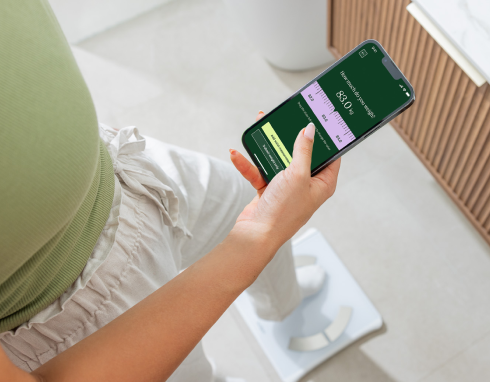
The strong positive relationship between weight tracking frequency and weight loss reinforces that the behavioural dimension of the program is as important as the pharmacological one. More consistent engagement with the app's tracking tools, not just receipt of medication, is independently associated with better outcomes. These findings suggest that investing in tools and interventions that support ongoing program engagement may be as clinically valuable as the medication itself.