


Iron deficiency and hair loss in women: What’s the link — and can it be reversed?
Iron deficiency is among the most common nutritional deficiencies worldwide.



Key takeaways
- Iron deficiency is one of the most common — and often reversible — causes of hair loss in women, with low iron stores prematurely pushing hair follicles into the resting (telogen) phase of the growth cycle. This leads to diffuse shedding across the scalp known as telogen effluvium, rather than patchy bald spots, and is more common in women due to heavy periods, pregnancy, vegetarian or vegan diets, and gut conditions that impair iron absorption.
- Ferritin levels are the most reliable marker for assessing iron stores related to hair health, with research suggesting women experiencing ongoing hair shedding may benefit from ferritin levels above 40 micrograms per litre. A standard full blood count alone isn't always enough — ferritin can fall within a lab's "normal" range but still be too low to support healthy hair growth, so ask your GP to test serum ferritin specifically.
- Hair regrowth after treating iron deficiency takes time — most women notice reduced shedding within two to three months of starting treatment, with visible improvements in hair density typically taking six months or longer. Treatment usually starts with oral iron supplements, while intravenous iron may be recommended for severe deficiency or poor absorption. Pairing iron-rich foods with vitamin C improves absorption, while tea, coffee, and calcium can reduce it.
If your hair has been shedding more than usual, it is easy to jump to conclusions — stress, genetics, age. But one of the most overlooked — and often reversible — causes of hair loss in women is iron deficiency, which is also among the most common nutritional deficiencies worldwide [1].
Here is what the research says about the link between iron deficiency and hair loss, what your ferritin levels should look like, and — importantly — whether your hair can grow back.
What is iron deficiency and how common is it in women?
Iron is an essential mineral your body needs to produce haemoglobin — the protein in red blood cells that carries oxygen to your tissues and vital organs. When your body does not have enough iron, it cannot make enough healthy red blood cells, and your tissues and organs may not get the oxygen they need to function properly [1].
Iron deficiency is the most common nutritional deficiency globally, and women are disproportionately affected [1]. Several factors put women at higher risk, including:
- Heavy periods (menorrhagia), which cause ongoing blood loss
- Pregnancy, which significantly increases iron demands
- Vegetarian and vegan diets, which may provide less readily absorbed iron
- Gastrointestinal conditions that impair iron absorption, such as coeliac disease and stomach ulcers [1]
When iron stores run low but have not yet officially reached anaemia, the condition is called iron deficiency without anaemia. When iron levels drop further, and the body can no longer produce enough healthy red blood cells, iron deficiency anaemia develops [1].
What are the symptoms of iron deficiency?
Hair shedding is one symptom, but you might notice iron deficiency in other ways first. Common symptoms include [1][2]:
- Fatigue and low energy that aren't improved with rest
- Pale skin
- Feeling out of breath more easily than usual
- Brittle nails or nails that become thin and curve upward at the edges
- Headaches and dizziness
- A sore or swollen tongue
- Hair loss or increased hair shedding
Symptoms of iron deficiency often overlap with other conditions, so a blood test is the only reliable way to know what’s going on.
Can iron deficiency cause hair loss in women?
Yes — there is a well-recognised association between iron deficiency and diffuse hair shedding. Hair follicles are highly active and need a steady supply of oxygen and nutrients to support healthy hair growth [3].
When iron stores are depleted, the body prioritises delivering oxygen to vital organs over less essential functions, such as hair growth. This prematurely pushes hair follicles into the resting (telogen) phase of the hair growth cycle, leading to increased hair shedding — a condition known as telogen effluvium [3][4].
Telogen effluvium typically presents as diffuse thinning across the scalp rather than patchy bald spots. You might notice more hair on your pillow, in the shower drain, or in your hairbrush. While this increased shedding can be upsetting, it is usually a temporary response to an underlying issue — and in most cases, the hair will grow back once that issue is identified and treated.
Some studies have explored a possible association between low iron stores and female pattern hair loss, though findings have been inconsistent and other hormonal and genetic factors are likely to play a significant role [4].
What ferritin levels does your hair actually need?
Ferritin is a protein that stores iron in your body, and checking your levels of serum ferritin is currently the most reliable marker for assessing your individual iron stores. A full blood count alone is not always enough — you can have normal haemoglobin but still have iron stores low enough to affect hair health [3].
Ferritin reference ranges vary between laboratories, and there is no universally agreed-upon ferritin level needed for hair regrowth. However, some research suggests women with ongoing hair shedding may benefit from ferritin levels above 40 micrograms per litre (mcg/L) [3][4]. In other words, your ferritin level may fall within the laboratory’s “normal” range but still be lower than ideal in the context of chronic telogen effluvium.
If you are concerned about hair shedding and are looking for a clearer picture of your iron stores, it is worth asking your GP to test not just your full blood count but also serum ferritin and total iron binding capacity. Sharing your medical history — including heavy periods, dietary patterns, or any relevant gut conditions — will help your clinician interpret the results in context.
How long does it take for hair to grow back after treating iron deficiency?
It can be frustratingly slow, but hair regrowth takes time. Hair naturally grows at a rate of around 1 to 1.5 cm per month, so even after iron levels are restored, noticeable improvements will not happen overnight.
Most people begin to notice a reduction in shedding within two to three months of starting treatment, with visible improvements in hair density typically taking six months or longer [5]. In cases of more prolonged shedding, it may take up to a year to see the full benefit of restored iron levels.
It is also worth remembering that if other factors are contributing to hair loss — such as hormonal changes, nutritional deficiencies beyond iron, or genetic hair loss — addressing iron alone may not fully restore hair health. A thorough assessment with your clinician will help identify any overlapping causes.
How is iron deficiency hair loss treated?
The first step is always to confirm the diagnosis with a blood test and identify the underlying cause. A treatment plan can then be developed, depending on the severity of your iron deficiency and what is driving it.
Oral iron supplements
For most women, oral iron supplements are the first line of treatment [1]. Iron tablets are typically taken daily, though your GP will advise on the right dose and formulation for you. Some people experience gastrointestinal side effects such as nausea or constipation, which can often be improved by adjusting the dose, taking the supplement with food, or changing when it is taken.
Intravenous iron
If oral iron supplements are not tolerated, are not absorbed effectively, or iron stores require rapid replenishment, intravenous iron may be recommended. This can be particularly helpful after significant blood loss, such as childbirth or very heavy periods. Administered in a clinical setting, intravenous iron can restore iron stores more rapidly than oral supplements [1].
Addressing the underlying cause
If iron deficiency is being driven by heavy periods, a gut condition, or dietary insufficiency, treating that underlying cause is essential. Otherwise, iron stores are likely to deplete again once supplementation stops.
Weight loss can sometimes trigger telogen effluvium, so it is worth discussing any hair changes with your clinician.
For women on the Juniper Programme who are concerned about hair health alongside their weight loss journey, Juniper’s Hair Renewal Treatment is available to Programme members.
How to support healthy iron levels and reduce hair loss risk
Alongside any prescribed treatment plan — including taking iron supplements — dietary changes can help maintain iron intake and support hair health over the long term.
Eat more iron-rich foods
There are two types of dietary iron: haem iron, found in animal products, which is more readily absorbed; and non-haem iron, found in plant-based foods, which requires a little more attention to absorb effectively [6].
- Haem iron sources: red meat, fish, seafood, liver (beef, lamb, chicken)
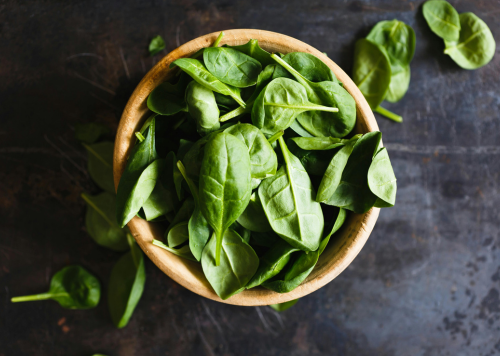
- Non-haem iron sources: leafy green vegetables (such as spinach and kale), lentils, chickpeas, tofu, fortified cereals, and pumpkin seeds [6]
Pair iron with vitamin C
Vitamin C significantly enhances the absorption of non-haem iron. Squeezing lemon juice over leafy greens, adding tomatoes and capsicum to a lentil dish, or having a glass of orange juice alongside iron tablets can all make a difference to how much extra iron your body can absorb [6].
Watch what you pair with iron
Certain foods and drinks can inhibit iron absorption. Tea, coffee, and calcium-rich foods consumed at the same time as iron-rich meals or supplements can reduce how much iron your body absorbs [6]. Try to leave at least a one-hour gap between iron intake and these foods, where possible.
Maintain a balanced diet
Iron deficiency rarely occurs in isolation. Ensuring your diet is balanced and rich in protein, B vitamins (particularly B12 and folate), zinc, and vitamin D will support both iron levels and overall hair health [7].
When to speak to a clinician
If you have noticed increased hair shedding — whether or not you have other symptoms of iron deficiency — it is worth booking a blood test. Hair loss can have multiple contributing factors, and identifying what is driving the shedding is the only way to choose the right treatment approach.
The good news is that iron-related hair loss is generally reversible. With the right diagnosis and consistent treatment, most women can restore hair growth over time.
Image credit: Pexels
in 1 year
- No GP referral
- Ongoing expert support
- Trusted by 260,000 members worldwide

“I was always on this yo-yo diet scenario, which never worked. I always just felt hungry throughout the dieting process and it actually kinda gets you down”


“Juniper has been my weight loss miracle, we all need help on our weight loss journey, especially because it gets harder the longer it goes on.”

“Juniper's just given me my confidence back. That's what my friends are saying, “You've got your smile back, you've got your sparkle back,” which I know I'd lost.”
- https://www.nhs.uk/conditions/iron-deficiency-anaemia
- https://pmc.ncbi.nlm.nih.gov/articles/PMC8002799
- https://pmc.ncbi.nlm.nih.gov/articles/PMC3678013
- https://pmc.ncbi.nlm.nih.gov/articles/PMC6380979
- https://www.nhs.uk/conditions/hair-loss
- https://www.nhs.uk/conditions/vitamins-and-minerals/iron
- https://pmc.ncbi.nlm.nih.gov/articles/PMC5315033


